Pages

Showing posts with label English as a global language. Show all posts

Thursday, 12 January 2017

ENGLISH LEARNING AND COMMONSENSE


In this blog entry we are going to share all our opinions about "commonsense", sharing our personal experiences from the oppresion to emancipation regarding the English Language Learning:


Antonio:
"Motivation is the first step to enjoy something, and this motivation is undoubtedly necessary for becoming emancipated learners. It is not a question of being against what we have, it is about improving it."
Would you like to read the whole story? click here: ๐Ÿ˜Š 


Andrea:

"I encourage my students to express their own opinions in order to develop critical thinking. I want them to awake and have their own perspectives. Moreover, I motivate them to travel abroad and meet new people."
Would you like to read the whole story? click here: ๐Ÿ˜Š 


Juan Carlos:
"At that moment, Spain in the mid 90’s, the perception of EFL was different. It wasn’t the trend that is nowadays, it wasn’t an indispensable education field for the future of the students, it wasn’t something compulsory to our parents; we were there learning English because we wanted and we enjoyed it. Without knowing it we lived outside of the educational commonsense."
Would you like to read the whole story? click here: ๐Ÿ˜Š 


Cristina:

"English imperialism had won an important battle. My parents, always thinking about what’s best for me, felt that it was so important for the next generation to learn English in order to succeed in life, that they needed to send a a frightened and rebellious teen totally against her will to learn English abroad at 14 years of age. I remember hating English and English people and everything that concerned English up to the point that I decided I was going to make my parents pay for it. Nowadays as an English teacher, and more mature adult, I can’t do anything but to understand that this was an amazing opportunity they were giving me and I wasted it."
Would you like to read the whole story? click here: ๐Ÿ˜Š 


Yvonne:
"Personal interests will be an incentive or an obstacle to learn and, understanding the student’s background will help teachers to connect the material of the curriculum to the student’s reality. This will allow students to be more engaged; more motivated and have an active role inside the classroom. Moreover, this will allow them emancipate and be autonomous learners. In the end, they will learn because they will really want to learn."
Would you like to read the whole story? click here: ๐Ÿ˜Š 


ENGLISH LEARNING AND CRITICAL THINKING


There are our impressions of what is critical thinking and why is so important for us, not only as a future teachers but also as student in continous trainning.


Yvonne:
"Imagine if we were not able to think for ourselves or some regulations would not allow us. This may sound absurd but it is much like what is happening with the education of our nation’s children. We are creating a society in which thinking is not welcomed. Take for instance television, most of the programs that are broadcasted, and you will realize the standards that rule our today’s society and the truth is that this is not making us progress. Second, how can we expect our students to be critical if we do not teach them how to achieve it? Most of the times, our education does not allow our students to be creative and just tell them what and how to do things. We are like robots."
Would you like to read the whole story? click here: ๐Ÿ˜Š 


Cristina:

"Being that we live in a world that is continuously evolving; there is new progress on every field of knowledge and we have more and more information and new and faster tools to get it everyday. Why wouldn’t we want our students to know how to think critically? How to be inquisitive and reasonable in the selection of criteria and information? When we think about these questions, it is important to state that the present generation of students will become the society of the future; so, why wouldn’t we give them the necessary tools to live and succeed on the future world?"
Would you like to read the whole story? click here: ๐Ÿ˜Š 


Antonio:
"Students are supposed to learn (sometimes memorize) a table of contents in order to pass one exam after the other. Let’s be honest: who in this country (apart from those who know the answer as specialists) remembers the name of the Spanish kings and queens since 1492? Or an extremely ‘useful’ quadratic equation? What about the different rhetorical figures we can draw out from a poem?"
Would you like to read the whole story? click here: ๐Ÿ˜Š 


Juan Carlos:
"Of course, the contents and subjects are important, but if professors don’t teach with the purpose of create critical thinkers ready to question the world and assemble their own opinion, empty students will be created. Another brick in the wall of our useless occidental education system.”
Would you like to read the whole story? click here: ๐Ÿ˜Š 


Andrea:
"As a conclusion, I would like to speak about some benefits of critical thinking. First, students become more independent and self-sufficient . Secondly, it shows them how to filter out relevant and irrelevant information. Thirdly, it teaches not to judge other perspectives. It enables to see beyond. This is crucial to work in teams and become a good leader. Eventually, it makes them better communicators because they know how to support their theory or point of view with proper arguments."
Would you like to read the whole story? click here: ๐Ÿ˜Š 


Friday, 30 December 2016

L3. ACTIVITY 3.1

L3. Activity 3.1. - Global languages

1- What is a global language?  

A global or world language can be defined as a language that is spoken internationally and is learned and spoken by a large number of people as an L2. It is characterized not only by the total number of speakers (L1 and L2 speakers), but also by its geographical distribution, as well as use in international organizations and diplomatic relations. Historically, the essential factor for the establishment of a global language is that it is spoken by those who wield power.

Is it the same as a lingua franca?  

A world language is usally a “lingua franca”, i.e., a common language that allows people from different and various backgrounds and ethnicities to communicate on a more or less equitable basis.

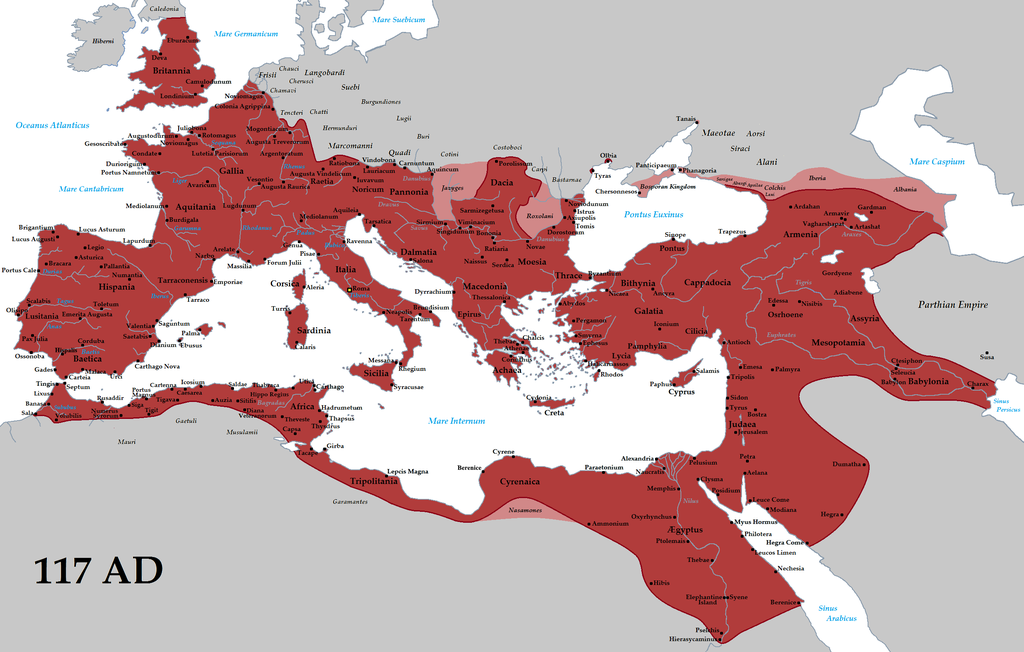
Roman Empire Trajan 117AD.png 

In this photograph (taken from Wikipedia), we can see the greatest extent of the Roman Empire (c. 117 AD) and the area governed by Latin speakers. In fact, Latin was a very powerful lingua franca in the past.


2- Do you think English can be considered a global language?

Englishis is probably considered the nearest thing there has ever been to a global language. Its reach around the world is much greater than anything achieved historically by Latin or French, and there has never been a language as widely spoken as English. In fact, we could say that, in the fields of business, academics, science, computing, education, transportation, politics and entertainment, English is already established as the de facto lingua franca.

3- Name other languages, from present or past times, which you think are, or were global languages.


Some other languages which can be considered as a world language from present or past times are:
 
Ancient Greek: the importance of the Greek Empire and its language in the past.
Latin: the same as Greek. Today we can find many languages in the south of Europe which come from Latin. Besides, the colonialist policy developed by some European countries (e.g.: Spain, France, Portugal, etc.) brought also Romance languages to other parts of the world.
French: as we have already mentioned, France became an Empire and brought French to all its territories in the world.
Spanish: like France, Spain created a vast Empire beginning in the XV century and finishing in the end of the XIX century. Click here to see the spread of Spanish.

4- In your opinion, what factors make a language become a global language?


We could say that the linguistic structure or properties might be a key factor to make a language become a global language. However, as Crystal (2003) points out, 'A language does not become a global language because of intrinsic structural properties, or because of the size of its vocabulary'. 

Besides, the link between language and culture, religion or great literature does not play a role in defining it the global language.

If it is not about linguistics nor culture, some could think it is due to the amount of native speakers. According to Goh and Lim (2010), this is not true. They consider that the status of a language has little or no links with the quantity of native speakers (Mandarin or Hindi would have become global languages if so). It is, nonetheless, the status of the native speakers which plays a relevant role in raising the status of a language, as well as the political, military or economic power of the country.


Interesting sites to get more information about this topic:
- The History of English: http://www.thehistoryofenglish.com/issues_global.html
- Crystal, D. (2003): English as a global language. Cambridge University Press. Chapter 1