Pages

Showing posts with label Luz. Show all posts

Sunday, 15 January 2017

ACTIVITY 7.2. (CLIL)


Activity 7.2. (CLIL) 
1- What is the aim of (CLIL) in relation to the teaching of L2/FL? 
The main aims of CLIL are the following: 
- Acquire knowledge using target language 
- Acquire necessary skill in the target language 
- Acquire necessary skills in the mother tongue 
- Understand and value both cultures 
- Develop cognitive and social skills

2- Should CLIL become a substitute for general language teaching, and be used as the sole method for teaching L2/FL as its the trend in “Vocational Training”? 
No, the best option is to use several methodologies and approaches. Each methodology or approach has advantages and disadvantages so using them according to our objectives and expectations is the most recommended. The teacher is the person who has to decide which methodology is demanded each time.

 3- Should there be some coordination between the teaching of FL in general and CLIL courses? 
Yes, it will be useful, recommended and interesting. Nowadays, every English teacher should master CLIL perfectly because this methodology is effective. 

Saturday, 14 January 2017

L7 - Activity 7.1. (CLIL)

In your opinion,

1- What is “Content and Language Integrated Learning” (CLIL)?   

CLIL is a dual-focused educational approach in which an additional language is used for the learning and teaching of both content and language with the objective of promoting both content and language mastery to pre-defined levels. 

In class we have watched the following video, which illustrate really well the reality of CLIL:


Here is a very illustrating video in which we can see how David Marsh explains CLIL and his own experience on when this approach worked and where it didn't.


And what about CLIL in Finland? Again, here is what David Marsh tells us:


2- Is there any difference between immersion and CLIL teaching? If so, what are the main differences?
 
There are some differences between immersion programs (click in the this link and get more information about specific programs) and CLIL teaching. In this article you will a very good and accurate comparison between both methodologies. For example:

  • Language of instruction:
    • In immersion, the language is often present in the students' context (their home, society or both), whereas CLIL it is about foreign languages.
    Resultado de imagen de immersion program
  •  Teachers:
    • In a immersion programme, the teacher is normally native speaker, whereas in CLIL this is not necessary (they can be asked to have a high level in the language though)
  •  Teaching materials:
    • The teaching materials which are used in immersion approaches are based in native speakers. However, materials used by CLIL normally use abbreviate materials.
  •  Language aim:
    • In immersion programs, the main objective is to obtain a certain degree of proficiency in the language and students can't use their mother tongue, whereas CLIL is aimed at achieving a functional proficiency and the students may use their L1 if needed.


Resultado de imagen de clil


Friday, 13 January 2017

L3 - ENGLISH VARITIES

English, as a worlwide language, has many varities which give the language a considerable richness. It happens the same with Spanish, French, etc. We decided for this activity to present one of these varities: the English in Ireland.

We thought that a very interesting way to present it was to create a Draw my life video. What's this? It is a video in which you draw images that represent your discourse, accompanied by a voice track which explains in loud voice what is being written at that moment.

Here is our task. We really hope you like it!


Wednesday, 4 January 2017

L5 - ACTIVITY 5.4

L5 - Activity 5.4


You have organised an exchange with a school in another country. During their visit, the students attend each other's school and stay at each other's homes. 


1-Describe the general terms of the arrangement.


Country: Spain and Ireland
Age: 16 years old 
Academic level of students: 4th of ESO (Spain) 4th year of high school (Ireland)
Length of the stay: 2 weeks
Who is visiting who this time: Irish students come to Spain 
School Context: 

  • Spanish school: Catholic grant aided school situated in the city of valencia with students that come from medium/high economic class families.
  • Irish school: Private catholic school situated in the small city of kilkenny Ireland with students that come from medium/high economic class families.


2- How would you prepare your students prior to the visit, bearing in mind the above set of conditions.


We would divide the arrangements for the visits in 3 phases that would last a month:


  • Phase 1: Getting to know each other (10 days)
  • Phase 2: Planning  (10 days)
  • Phase 3: Getting ready (10 days)

Phase 1
Description: On this phase students will be paired up with a student from the foreigner country and will try to get to know their partner and exchange information about their likes and dislikes, hobbies, personality, etc.

Objectives:

  • To develop their digital and linguistic competence in English.
  • To practice their social and writing skills.
  • To start learning about other cultures.

Activities:

  • They will create an email account and exchange it with their partner through the teachers.
  • Students will learn the structure, vocabulary and grammar  needed to send an email in english to the foreign student.
  • After practicing in the classroom the students will have to write three emails with three different objectives: 
1. Presenting and describing yourself
2. Personalized answer to the partner's answer 
3. Talking about your city and making suggestions about the activities that will take place during the actual visit by the Irish students.


Phase 2
Description: On the second phase, students will keep the email communication with the foreigner students but the main task will be to give them some communication tips and tools to help them communicate with their assigned visitor. 
On the other hand they will gather all the information about their Irish partner and discuss in class which kind of activities would be interesting for the visitors. Being that the visit will last 2 weeks they could also plan a trip for the first weekend and a goodbye party for the last one before the Irish students leave
Objectives:
· Develop planning and organization skills.
· To give students the chance to work on a project and develop their sense of responsibility.
· To increase the students communicative skills. 


Activities:
1. Teach the target language in the english classroom and have them practice or refresh the use of useful language tips by role playing, drill activities, listenings and practicing with their classmates in class.

2. Filling the already created and used through the year "useful vocabulary and grammar notebook" with new grammar and sections with vocabulary the teacher and them believe that will be useful when communicating with the Irish visitor.

3. Organize and present to the classroom in small teams a planning with a couple of activities, the trip and the party that the team believes will be enjoyable for the visitors, taking into account all the information they have gathered from the Irish students. The best ideas will be written into a leaflet that will be sent to the Irish students.


Phase 3
Description: On this last phase, students will be arranging everything for the visit, different tasks will be assigned depending on the activities that were agreed in the last activity of the previous phase and will take place during the 2 weeks with the Irish visitors. E.g gathering the money for the trip, creating welcoming decorations, deciding the last details for the goodbye party, sending the last pre-visit emails for their partners with instructions on what to pack on their luggages or how will they meet once they get to Spain, etc

Objectives:
· To give the students the chance to work as a team.
· To teach students to value the others work and efforts.
· To Develop planning and organization skills.
· To give students the chance to work on a project and develop their sense of responsibility.
· To increase the students communicative skills. 

Activities:
The activities as mentioned on the description will depend on what the students had planed on the previous phase.


Tuesday, 3 January 2017

L5 - ACTIVITY 5.3


L5 - Activity 5.3

1- Describe an example of exercise, or unit, from a book, dealing with intercultural competence.
English File: Pre-intermediate Student’s Book, is one of the examples that we can use with our students in order to apply intercultural competence. 


In this textbook we can find some examples of interesting exercises that go beyond of the classic “fill the gaps” activities, i.e, we can find in page 14 a text called A moment in history about the election of Barack Obama as the first black president of the United States of America, using this social event as the conductive thread of a reading activity.

But we can find other kinds of activities, not only texts. In this same coursebook there is a very interesting listening activity about the life of those teenagers who are wheelchair users, and more activities related with other intercultural topics.  


2- In your opinion, has the subject been dealt with appropriately? Explain why it has or why it has not.

A moment in history, is a very interesting text about how the afroamerican breed has changed on the USA society, a topic that goes beyonf the curriculum. The text includes the grammar and the vocabulary of the unit, but is also a great opportunity of bring the intercultural aspects of our society to our classrooms as something real, meaningful and worthy for the student.

Is an example of how to EFL exercises can also help the students on his/her way to become in critical thinkers.


3- How would present/include it in your teaching?
 The reading of the text A moment in history could be a very useful tool to work the Curriculum and behind it. But it will be a more complete activity if it would include a chance to make the students build their own knowledge, using the Constructivism theories for that, it would be interesting add some some pre-reading activities and a debate as a post-reading activity.


Saturday, 31 December 2016

L5: ACTIVITY 5.2


L5 -  Activity 5.2

1- How does I.C. relate to the use of a language as a lingua franca?

Lingua francas have appeared for commercial reasons but also for cultural, religious, diplomatic and administrative convenience. In addition, they are a way to exchange information between scientists and other scholars of different nationalities. That is the reason why, in order to avoid cultural mistakes, it is important to learn its culture: rules, norms and expectations. We can't master a language without mastering its culture. Besides, our interactions may be useless and fruitless without that necessary competence. For example, negotiations and politics are extremely related to intercultural competence because success depends on the ability of adaptation and respect. 


2- How would you include I.C. in your teaching of English as a global language?


We would teach the culture-specific concepts of perception, thinking, feeling, and acting because they are necessary to understand the language as a whole picture. We will prepare different activities, such as :


  • Introducing culture: celebrations, traditions, beliefs...
  • Preparing essays and readings about the foreign culture
  • Discussing differences between our culture and the foreign one
  • Showing respect and avoiding ethnocentrism 
  • Preparing presentations about customs in different regions
  • Creating contests about previous cultural knowledge 
  • Using songs, films, series and literature to introduce culture 

Friday, 30 December 2016

L5 - ACTIVITY 5.1

L5 - Activity 5.1

1- What is “Intercultural Competence” (I.C.)?


Some of the examples are the following:
The United States Army Research Institute has defined it as "A set of cognitive, behavioural, and affective/motivational components that enable individuals to adapt effectively in intercultural environments."
Selmeski (2007) identified eleven different terms used as equivalent: cultural savvy, astuteness, appreciation, literacy or fluency, adaptability, terrain, expertise, competency, awareness, intelligence, and understanding.
D.K. Deardoff  defines intercultural  competence as  “the  ability  to  develop  targeted knowledge,  skills  and attitudes that  lead  to  visible behaviour and communication that are both effective and appropriate in intercultural interactions.”
In my opinion, intercultural competence is the ability to communicate and behave appropriately with those who are culturally different. For example: An Spaniard that travels to Germany and shakes hands with someone from Germany instead of giving two kisses. That would be intercultural competence.

2- Is I.C. important for communication?


Intercultural Competence is of crucial importance in order to ensure an effective communication. In this way, knowing the culture of the others is very important to help reduce misunderstandings.


3- How does I.C. relate to identity?


As intercultural competence is related with culture, each individual adopts a set of values and beliefs as his or her own, while some are of more personal, others of a more social nature. In order to create self-identity, a person negotiates with society the meaning of his or her identity, and it may arise from the learning of social roles through personal experience, and through a variety of identity formation strategies (identity negotiation).

L3. ACTIVITY 3.1

L3. Activity 3.1. - Global languages

1- What is a global language?  

A global or world language can be defined as a language that is spoken internationally and is learned and spoken by a large number of people as an L2. It is characterized not only by the total number of speakers (L1 and L2 speakers), but also by its geographical distribution, as well as use in international organizations and diplomatic relations. Historically, the essential factor for the establishment of a global language is that it is spoken by those who wield power.

Is it the same as a lingua franca?  

A world language is usally a “lingua franca”, i.e., a common language that allows people from different and various backgrounds and ethnicities to communicate on a more or less equitable basis.

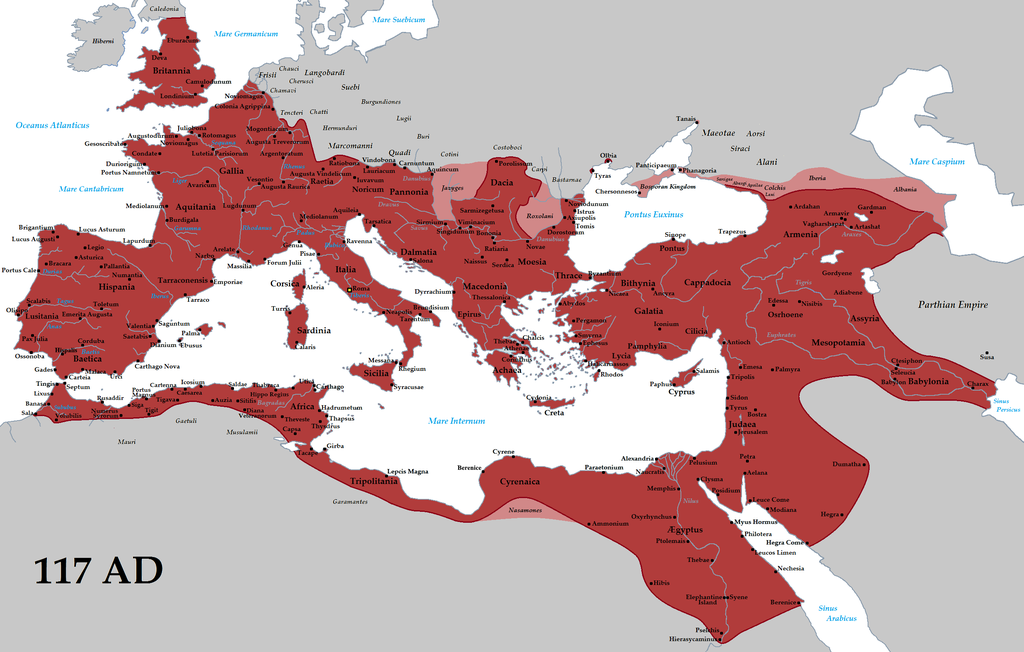
Roman Empire Trajan 117AD.png 

In this photograph (taken from Wikipedia), we can see the greatest extent of the Roman Empire (c. 117 AD) and the area governed by Latin speakers. In fact, Latin was a very powerful lingua franca in the past.


2- Do you think English can be considered a global language?

Englishis is probably considered the nearest thing there has ever been to a global language. Its reach around the world is much greater than anything achieved historically by Latin or French, and there has never been a language as widely spoken as English. In fact, we could say that, in the fields of business, academics, science, computing, education, transportation, politics and entertainment, English is already established as the de facto lingua franca.

3- Name other languages, from present or past times, which you think are, or were global languages.


Some other languages which can be considered as a world language from present or past times are:
 
Ancient Greek: the importance of the Greek Empire and its language in the past.
Latin: the same as Greek. Today we can find many languages in the south of Europe which come from Latin. Besides, the colonialist policy developed by some European countries (e.g.: Spain, France, Portugal, etc.) brought also Romance languages to other parts of the world.
French: as we have already mentioned, France became an Empire and brought French to all its territories in the world.
Spanish: like France, Spain created a vast Empire beginning in the XV century and finishing in the end of the XIX century. Click here to see the spread of Spanish.

4- In your opinion, what factors make a language become a global language?


We could say that the linguistic structure or properties might be a key factor to make a language become a global language. However, as Crystal (2003) points out, 'A language does not become a global language because of intrinsic structural properties, or because of the size of its vocabulary'. 

Besides, the link between language and culture, religion or great literature does not play a role in defining it the global language.

If it is not about linguistics nor culture, some could think it is due to the amount of native speakers. According to Goh and Lim (2010), this is not true. They consider that the status of a language has little or no links with the quantity of native speakers (Mandarin or Hindi would have become global languages if so). It is, nonetheless, the status of the native speakers which plays a relevant role in raising the status of a language, as well as the political, military or economic power of the country.


Interesting sites to get more information about this topic:
- The History of English: http://www.thehistoryofenglish.com/issues_global.html
- Crystal, D. (2003): English as a global language. Cambridge University Press. Chapter 1

L2. ACTIVITY 2.1


L2-CEFR for Languages.- Assessment and ELP

Activity 2.1 Look at the descriptors below (taken from the CEFR) and decide where they belong in the boxes

a)Can introduce himself/herself, asking and answering questions about personal details, such as where he/she lives, people he/she knows and things he/she has.

This example belongs to the A1 level (breakthrough or beginner).

b)Can summarise information from different spoken and written sources, reconstructing arguments and accounts in a coherent presentation.

This example belongs to the C2 level (mastery or proficiency).

c)Can interact in a simple way provided the other person talks slowly and clearly and is prepared to help.

As in the first example, this one belongs to the A1 level (breakthrough or beginner).

d)Can express himself / herself spontaneously, very fluently and precisely, differentiating finer shades of meaning even in more complex situations.

As in the second example of this activity, this case belongs to the C2 level (mastery or proficiency).